If you can't be dependable on the daily grind, you can't be dependable on the big one.
Unified severity labels and the Cyber Incident Response Procedure (CIRP) rubric, AI-applied for consistency. Escalation and notification tied to severity. Every incident — from a single phishing click to a regulator-disclosable breach — recorded against the same standard, on the same record.
The system of record for incidents.
Incidents normally live across Slack threads, Jira tickets, war-room calls, and lawyer-only email chains — and the daily grind of SEV-4s and SEV-5s rarely gets recorded at all. That's dangerous in a world of escalating and overlapping notification obligations. Adversarial collapses the fragmented workflow into one confidential, authoritative record: the same severity rubric, the same documentation discipline, the same escalation logic, applied to every incident as it lands.
Single Source of Truth
Unify incident data across teams, tools, and workflows into one authoritative record.
Severity Scoring
Standardized scoring ensures consistent prioritization across teams.
SEV-1 — CRITICAL
SEV-1 incidents are catastrophic with widespread and/or prolonged material impact. SEV-1 incidents should be reviewed against reporting and disclosure requirements related to incident materiality.
SEV-2 — HIGH
SEV-2 combines targeted malicious intent AND operational impact. In a SEV-2 incident, a motivated adversary is aware of the organization, attempting a compromise, and successful to some extent. SEV-2 incidents should be rare and warrant significant escalation.
SEV-3 — MEDIUM
SEV-3 incidents involve either targeted malicious intent OR operational impact — research into the organization, opportunistic campaigns that cause some impact such as adware installation, or individual cryptominer infections.
SEV-4 — LOW
SEV-4 incidents are confirmed instances of attempted unauthorized activity or violations of policy. SEV-4 is also used as the default initial severity rating of candidate incidents needing further investigation.
SEV-5 — INFORMATIONAL
SEV-5 incidents are informational — routine, expected, or already-mitigated events recorded for completeness. They carry no active response obligation, but logging them keeps the register honest and feeds trend analysis and lessons learned.
Lessons learned
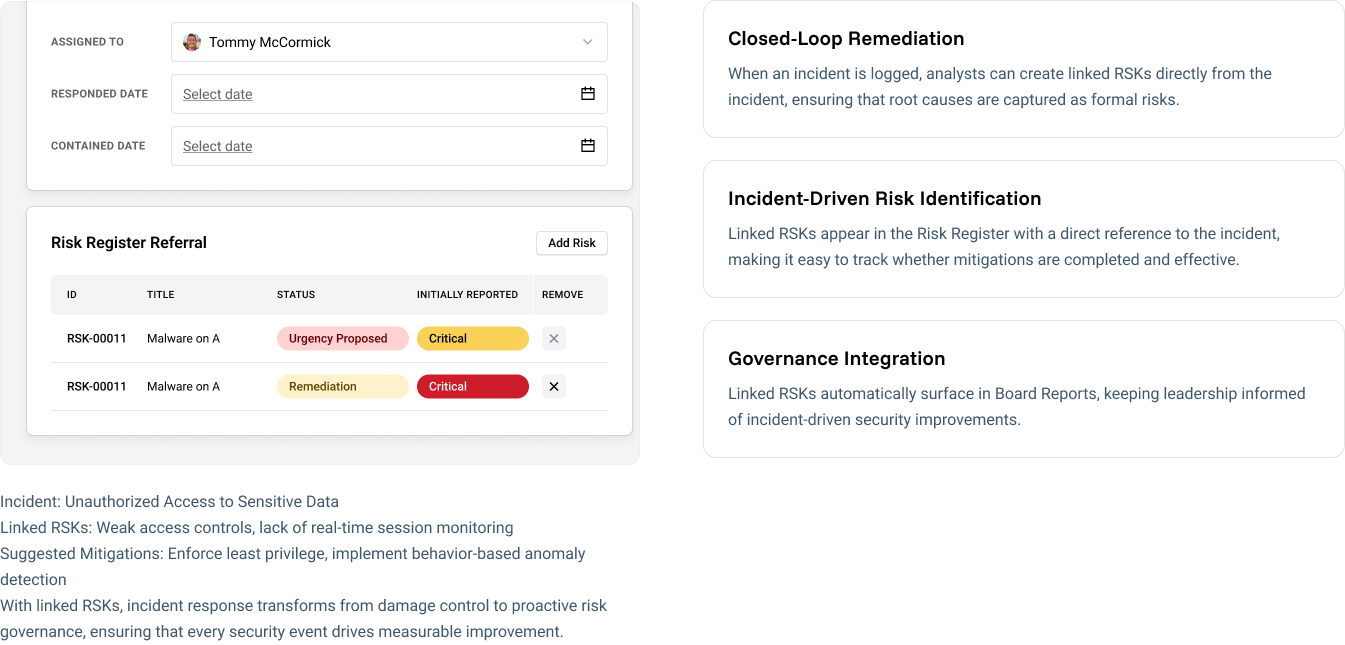
Incidents shouldn't just be reactive events — they should feed directly into continuous risk improvement. The Adversarial platform allows security teams to seamlessly link incident findings to new or existing RSKs (Risk Register Entries) to prevent recurrence, reflect root-cause analysis (RCA), and strengthen security posture.
Real-Time Visibility
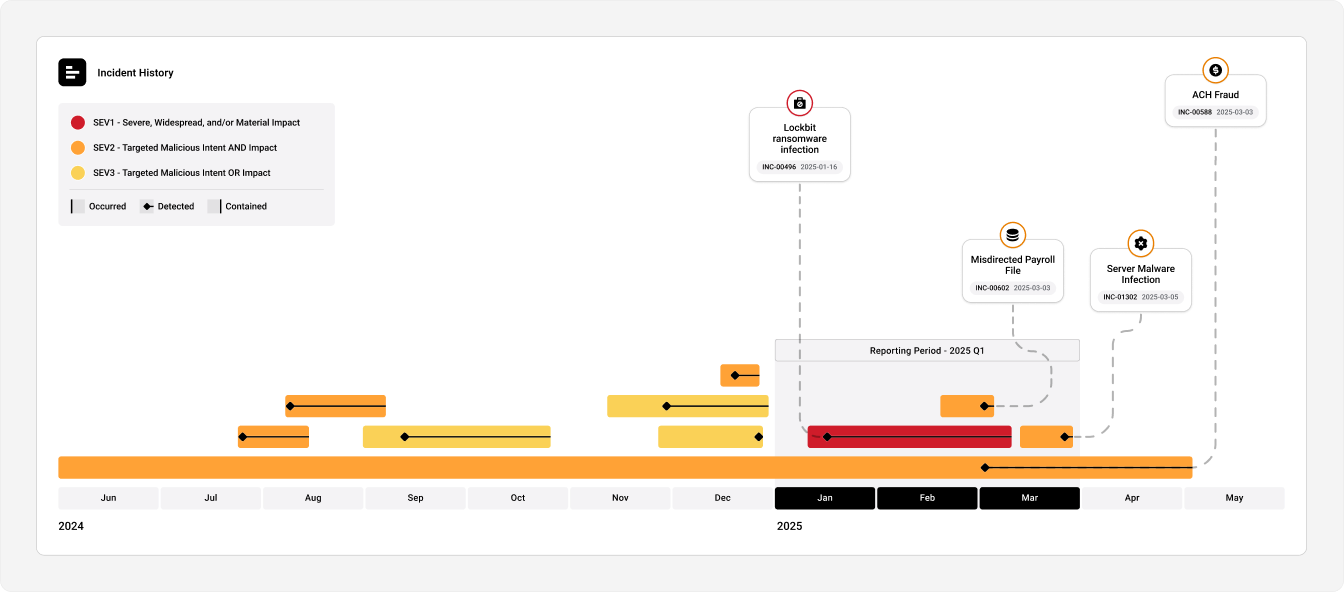
Live tracking of incident timelines, root causes, and remediation efforts.
Context-based Notifications
Smart Alerts for the Right Stakeholders
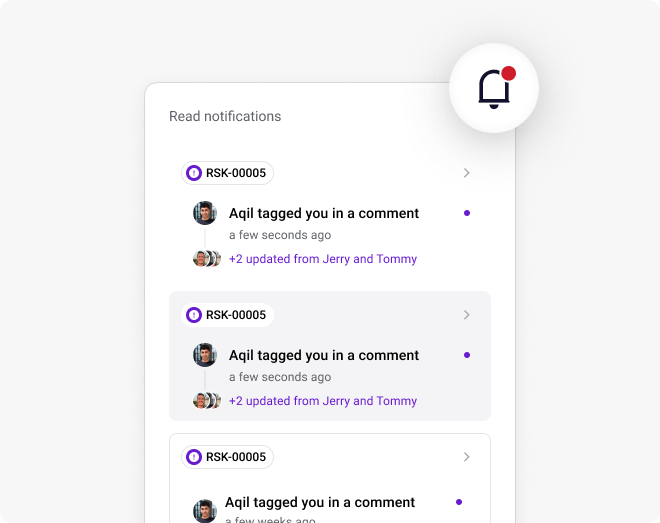
In incident response, not every alert should go to everyone — but the right alerts must reach the right people immediately. The Adversarial platform enables Context-Based Notifications, allowing teams to configure alerts dynamically based on incident attributes, ensuring that only the most relevant stakeholders are engaged.
Because incidents in Adversarial are tagged with Threat Objectives (TOs), notifications can be configured to automatically trigger based on the nature of the incident. This ensures that the right teams are informed at the right time — without overwhelming others with unnecessary noise.
- Precision Alerts — Configure notifications based on Threat Objective, severity, or compliance impact to ensure each alert reaches the most relevant teams.
- Role-Based Routing — Instead of a generic SOC escalation path, teams can customize workflows so incidents automatically notify legal, compliance, executives, or external partners as appropriate.
- Regulatory & Business-Critical Triggers — When a Data Disclosure TO is tagged, for example, the platform can automatically alert the Data Protection Officer (DPO), ensuring compliance teams assess reporting obligations immediately.
- Custom Notification Groups — Organizations can define groups such as CISO, PR, external counsel, or key engineering teams, ensuring the right mix of stakeholders is always in the loop.
With Context-Based Notifications, incident response becomes targeted and strategic, ensuring swift action without unnecessary noise, keeping teams focused, compliant, and responsive to the most critical events.